
Cleveland Criminal History Checks
Start by deciding which document answers the question. Cleveland Police holds its incident and accident reports and offers a local criminal-history service. Cleveland Municipal Court holds city traffic, ordinance, and misdemeanor matters. A person arrested by city police may also have a booking at the White County Jail and a later file in a county court. Georgia Felon Search is broader by place, but it reports qualifying Georgia felony convictions rather than every arrest or local case.
- Ask Cleveland Police for the incident, accident, or local-history record it maintains. Give a case number, date, place, and involved name when known.
- Choose walk-in, phone, email, or fax for a police report. A local criminal history requires an in-person visit and signed consent.
- Call Cleveland Municipal Court for a city citation or ordinance case. Request the actual court file from the clerk.
- Check White County Jail for booking and bond information, then the proper county clerk if the charge left municipal court.
- Use Georgia Felon Search for its limited felony-conviction product, or request a personal GCIC inspection when needed.
Cleveland's Cash-Only History Check
Cleveland Police offers a distinct $15 local criminal-history service. The person whose history is sought must appear at the Campbell Street office during administrative hours, sign consent in front of staff, and provide a driver's-license copy. Payment is cash only. This is not the same transaction as a $15 Georgia Felon Search result, nor is it a fingerprint-based national check.
Ask records staff what place and time span the local result covers. A city file may not show arrests made elsewhere, and a county prosecution may sit with another clerk. The statewide felony product also excludes many non-conviction events. For review of one's own broader Georgia history, GCIC provides an official personal record-inspection channel.
Records at Cleveland Police
The Cleveland Police Department is at 342 Campbell Street. Administration is open Monday through Friday, 8 a.m. to 4 p.m.; officers remain available around the clock. Call 706-348-7078. The nonemergency number, 706-865-2111, transfers to White County E911. Reports may be requested in person, by phone, by email at cpdinfo@clevelandga.org, or by fax at 706-865-9124.
Supply the report type, date, location, involved names, and case number if known. The custodian has up to three business days to produce the record or state its availability, estimated cost, and production date. Finished reports are picked up at the department.
The official department page shows the city source for these request routes.
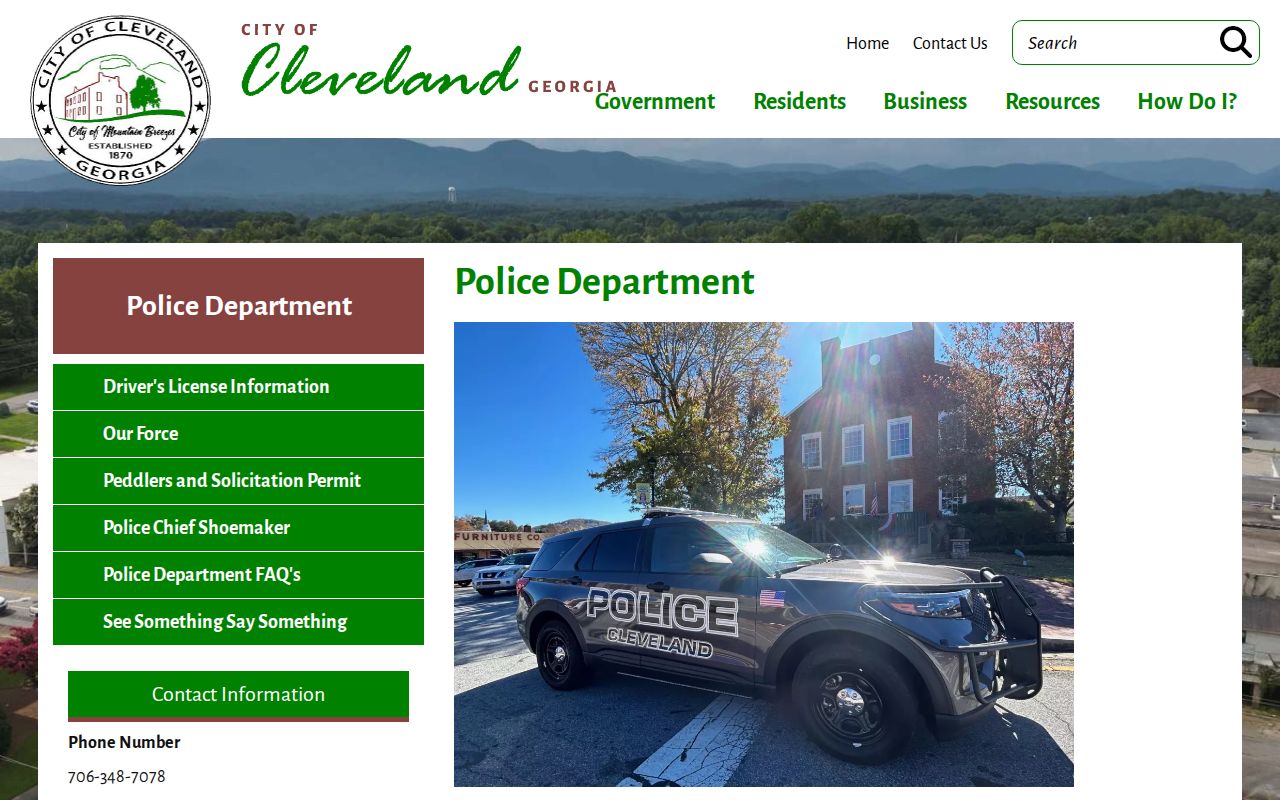
The image underscores why Cleveland Police, rather than the county request form, is the right custodian for a CPD report.
Cleveland Accident Report Rules
A paper accident report costs $5 and normally takes three business days. The form asks for a case number, accident date, involved names, location, requester relationship, request date, printed name, signature, phone, and any pickup designee. Georgia limits who may obtain an accident report, so the form provides eleven qualifying-interest choices.
| Detail | Function | Rule |
|---|---|---|
| Case number | Direct retrieval key | Use it if known |
| Date, names, place | Identifies the crash | Give enough detail to distinguish it |
| Qualifying interest | Shows lawful access | Select the relationship that applies |
| Pickup designee | Authorizes collection | Name that person on the form |
Bring valid photo identification. A report not collected within 90 days must be requested again. Audio, video, and photographs may add cost. For broad city requests, the first 15 minutes of labor are free, then the lowest-paid qualified employee's rate applies. Standard copies cost $0.10 per page.
Booking and Arrest Records in Cleveland
Cleveland has no separate jail identified in official sources. City arrestees are booked at the White County Detention Center at 1210 Hulsey Road. That split creates two records: CPD owns the officer's narrative, while the jail owns custody, bond, and intake details. Call Cleveland Police for the first and White County Jail at 706-865-5177 for the second.
The county's current-inmate page is temporarily disabled because scammers used roster data to target relatives. Recent custody questions require the jail phone route. Georgia VINE can provide notifications, but it does not replace the report or final court record. The White County arrest search explains the county-wide routing chain.
Cleveland Citation Posting Delay
A new citation may not appear in EZcourtpay for three to five business days. Waiting through that gap can prevent a false conclusion that no case exists. Even when an entry appears, EZcourtpay is chiefly an inquiry and payment tool, not a full public docket. Ask the municipal clerk for the citation, notices, plea, and disposition.
Online payment closes at 5 p.m. on the day before court. Payment also acts as a guilty plea and electronic waiver. Someone who wants to contest a citation should not treat that screen as a neutral search portal.
The Cleveland Municipal Court File
Cleveland Municipal Court processes misdemeanor criminal, city ordinance, and traffic matters. Its office is at City Hall, 85 South Main Street, and opens Monday through Friday, 8 a.m. to 5 p.m. Call 706-865-0058. Judge Garrison Baker and Clerk Charlie LaVelle are named on the official city source. No free public name portal was confirmed, so call or use the Court Case Info Request.
| Court Name | Cleveland Municipal Court |
|---|---|
| Case Types Heard | Municipal misdemeanors, ordinance matters, and traffic citations |
| Case Lookup Channel | Clerk phone, City Hall counter, or Court Case Info Request; EZcourtpay is limited |
| What the File Shows | Citation, session, plea, events, disposition, fine, and releasable warrant status |
| Copies & Fees | Confirm with the clerk; city copy and labor rules may apply |
Cleveland's Split Court Locations
The office and courtroom are not in the same place. Staff work at City Hall, but the monthly session begins at 5:30 p.m. in the White County Courthouse at 59 South Main Street. Call the City Hall office for file or schedule questions, then go to the courthouse for the hearing. Both addresses are on South Main, which makes this local split easy to miss.
In-person payment accepts cash, money order, and card. Mailed payment requires a money order and notarized waiver, not cash or a personal check. The card convenience charge appears during the transaction. Failure to appear can lead to a bench warrant and driver's-license consequences.
How Cleveland Records Reach the County
A city event can produce records at three levels. Cleveland Police creates the report. White County Jail creates the booking. The municipal clerk keeps city matters, while felony accusations and transferred cases belong with White County Superior Court. The final result may then be reported to the Georgia Crime Information Center.
Record flow: Cleveland Police Department › Cleveland Municipal or White County Courts › Georgia Bureau of Investigation, Georgia Crime Information Center
Recent activity is clearest in police and jail sources. An older case is best traced through the issuing court and then compared with GCIC. The local file often has motions and notices that a repository result omits.
Cleveland's $50 Restriction Route
For an eligible Cleveland arrest, complete Section One of the GCIC restriction form and bring or mail it to Municipal Court with a $50 nonrefundable processing fee. Keep proof of the filing, disposition, and response. This city step is separate from the current GCIC processing fee that may apply later.
Jurisdiction controls the reviewer. If CPD made the arrest but Superior Court prosecuted it, confirm whether the municipal or Enotah Circuit prosecutor must act. Restriction limits public dissemination of eligible arrest information; it does not promise every police, court, news, or private copy disappears.
Cleveland Court Record Boundaries
The municipal clerk should not be asked to recreate a felony file. Once a matter is filed in White County Superior Court, the Clerk of Court at 59 South Main Street, Suite B, is the record custodian. The criminal desk can be reached at 706-865-2613, with published criminal extensions 323 and 369. Magistrate Court handles warrants and listed misdemeanors, while Probate Court handles misdemeanor traffic, DUI, and game or fish cases assigned to it.
The official White County Clerk page shows the county-level source that follows Cleveland records after they leave city jurisdiction.
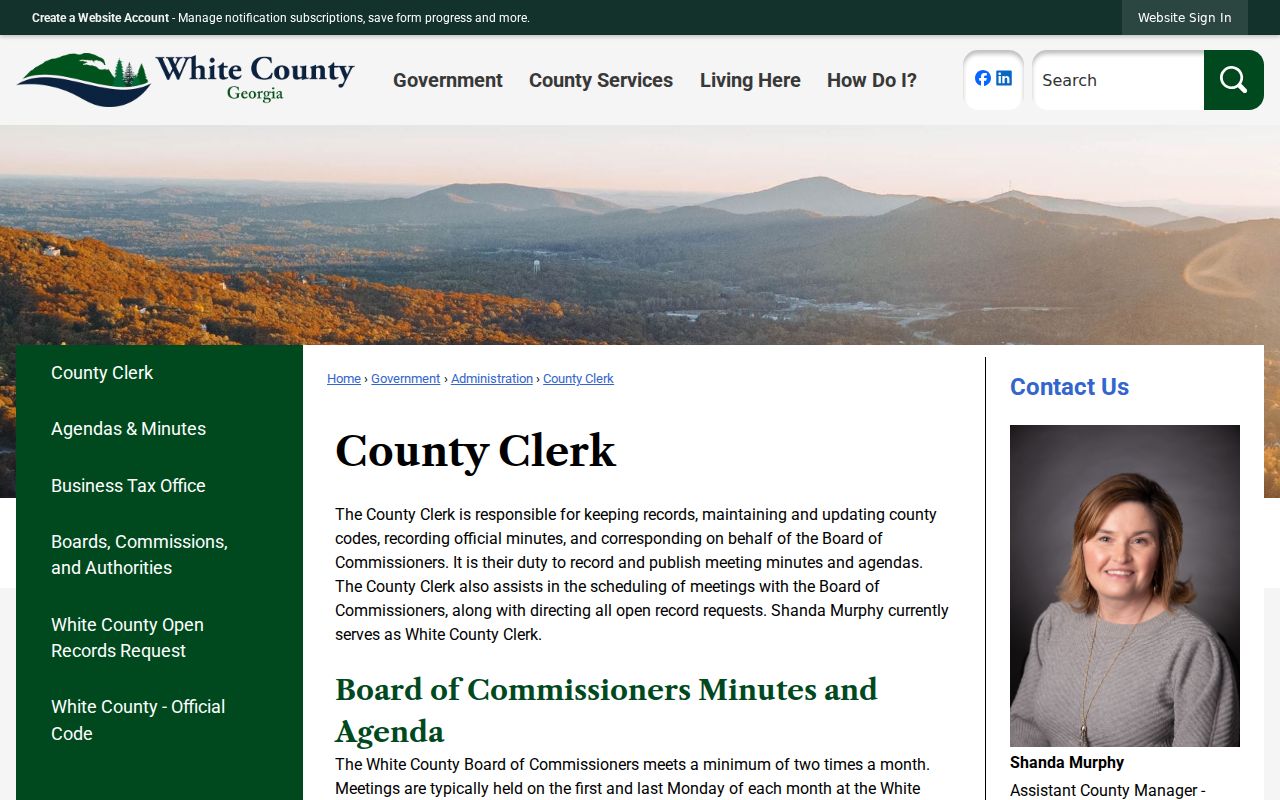
This source marks the practical boundary between a Cleveland municipal file and a county criminal case.
Helen Municipal Court offers a useful county comparison because it retains that city's own traffic and ordinance records. The official Helen court page is shown only to clarify that Cleveland's clerk cannot retrieve another city's municipal file.
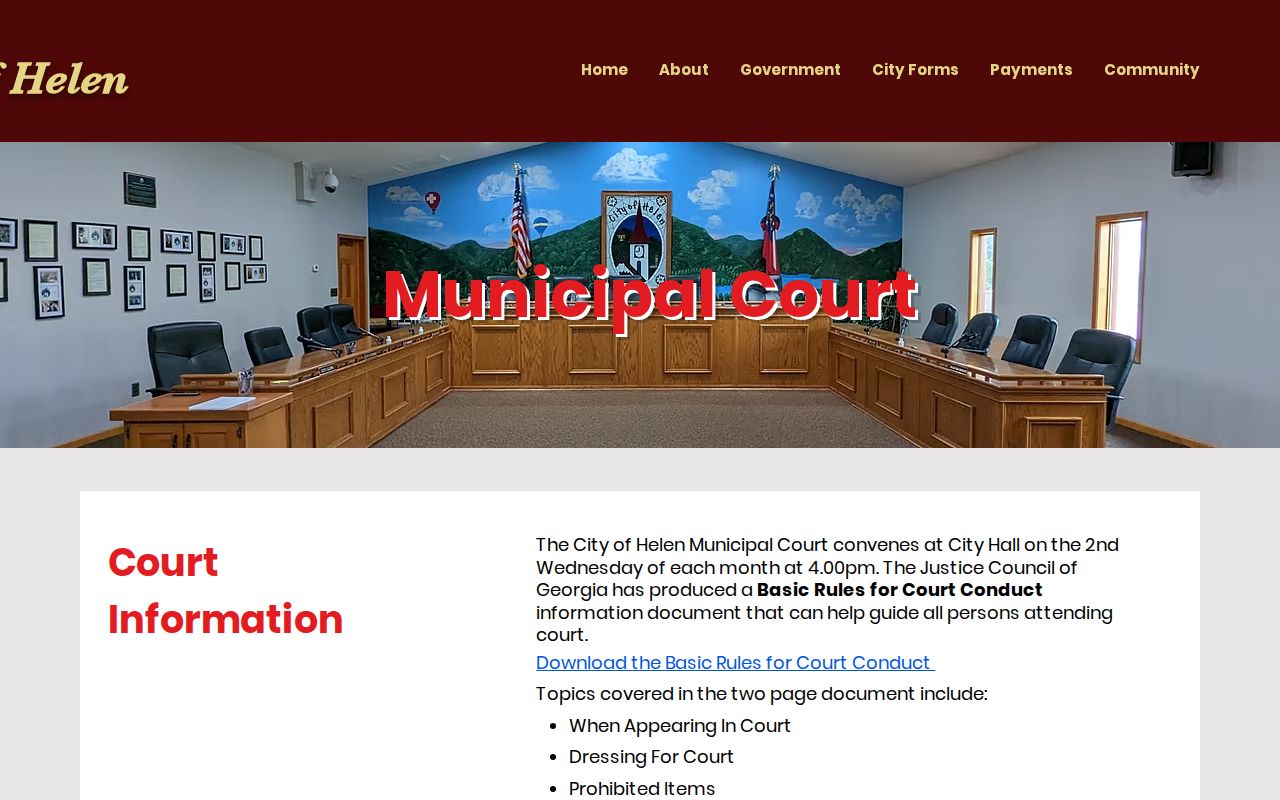
The separate municipal source reinforces the core routing rule: request a city record from the city that created it.
Cleveland Local Versus State Records
The police check, Georgia Felon Search, and a personal GCIC inspection answer different questions. Cleveland's service begins at CPD and has the scope that staff confirms. Georgia Felon Search uses full name, race, sex, and date of birth to return qualifying Georgia felony convictions for $15. It is not a complete state history.
A person reviewing a broader record can arrange a GCIC inspection through the GBI. Authorized electronic civil fingerprints use Fieldprint through the Georgia Applicant Processing Service. No official source confirmed a collection site in Cleveland, so use the registration locator or ask the agency that supplied the purpose code.
Cleveland Records and City Growth
Cleveland grew from the Mt. Yonah settlement and took its present name in 1870. The crossroads near today's City Hall reflects the older Clarkesville-to-Dahlonega route. That history can matter when searching an old report, ordinance, or municipal file because a modern street reference, department name, or storage practice may not match the terms used when the record was created.
For an older Cleveland request, give staff a year range, the names used at the time, the event type, and any former place description. Ask whether the active department still holds the file or whether it moved to city storage. Do not assume the county's historic courthouse is the custodian merely because it is the best-known public building downtown. Modern police records begin with CPD, municipal matters begin with the city clerk, and county criminal cases begin with the appropriate White County court.
This source-first method is also useful for genealogy or local-history work. It separates a municipal administrative record from a criminal case and reduces the chance that a broad request reaches an office with no power to search the relevant archive.
Cleveland Record Access Rules
The Georgia Open Records Act presumes city records are open unless a law permits withholding. Cleveland can charge lawful copy, media, and labor costs, but the first 15 minutes of labor are free. A response generally comes within three business days, though it may give a later production date and estimate rather than the finished file.
Active investigations, juvenile material, victim details, personal identifiers, and sealed or restricted records may be withheld or redacted. Repository data follows separate dissemination rules. Send the request to the office that owns the file; the county sheriff form expressly does not reach Cleveland Police.
Key Statutes:
Georgia Open Records Act, O.C.G.A. §§ 50-18-70 through 50-18-77 supplies access, exemption, response, and reasonable-cost rules.
O.C.G.A. § 35-3-34 governs GCIC dissemination and public felony-conviction access.
O.C.G.A. § 35-3-37 establishes Georgia record restriction.