
Criminal Court Cases in White County
White County Superior Court, part of the Enotah Judicial Circuit, has exclusive felony jury-trial jurisdiction. Its Criminal Division creates and keeps felony accusations, indictments, motions, hearing notices, orders, judgments, and sentence papers. The Clerk of Court is the record custodian. A felony file belongs there even when the sheriff made the arrest or the case began with a Magistrate Court warrant.
Other charges take different paths. Magistrate Court issues arrest, inspection, and search warrants and hears listed misdemeanors. Probate Court handles misdemeanor traffic and game-and-fish matters within its jurisdiction. Cleveland and Helen municipal courts keep their own ordinance and traffic dockets. The issuing agency, jail, and trial court may therefore hold three different pieces of one event.
White County Courts by Charge
The record type is the best routing clue. Georgia does not use one numbered class system for every felony. A felony generally means an offense punishable by more than twelve months, life, or death, while a misdemeanor is generally punishable by no more than twelve months. The filed charge and assigned venue, not the label on a booking screen, determine which White County clerk has the official case file.
Superior Criminal Division
59 South Main Street, Suite B
Cleveland, GA 30528
706-865-2613
Monday–Friday, 8:30 a.m.–5:00 p.m.
Magistrate Criminal Division
59 South Main Street, Suite E
Cleveland, GA 30528
706-865-6636
Monday–Friday, 8:30 a.m.–5:00 p.m.
Probate Court occupies Suite H at the same South Main Street complex and can be reached at 706-865-4141. Modern court counters are located there, not in the historic courthouse at the center of Cleveland. Call before a visit if accessibility, recording equipment, or entry procedures may affect the trip; no official page confirmed a device ban or parking rule.
The county's Superior Court profile supplies the local felony-jurisdiction and Enotah Circuit context:
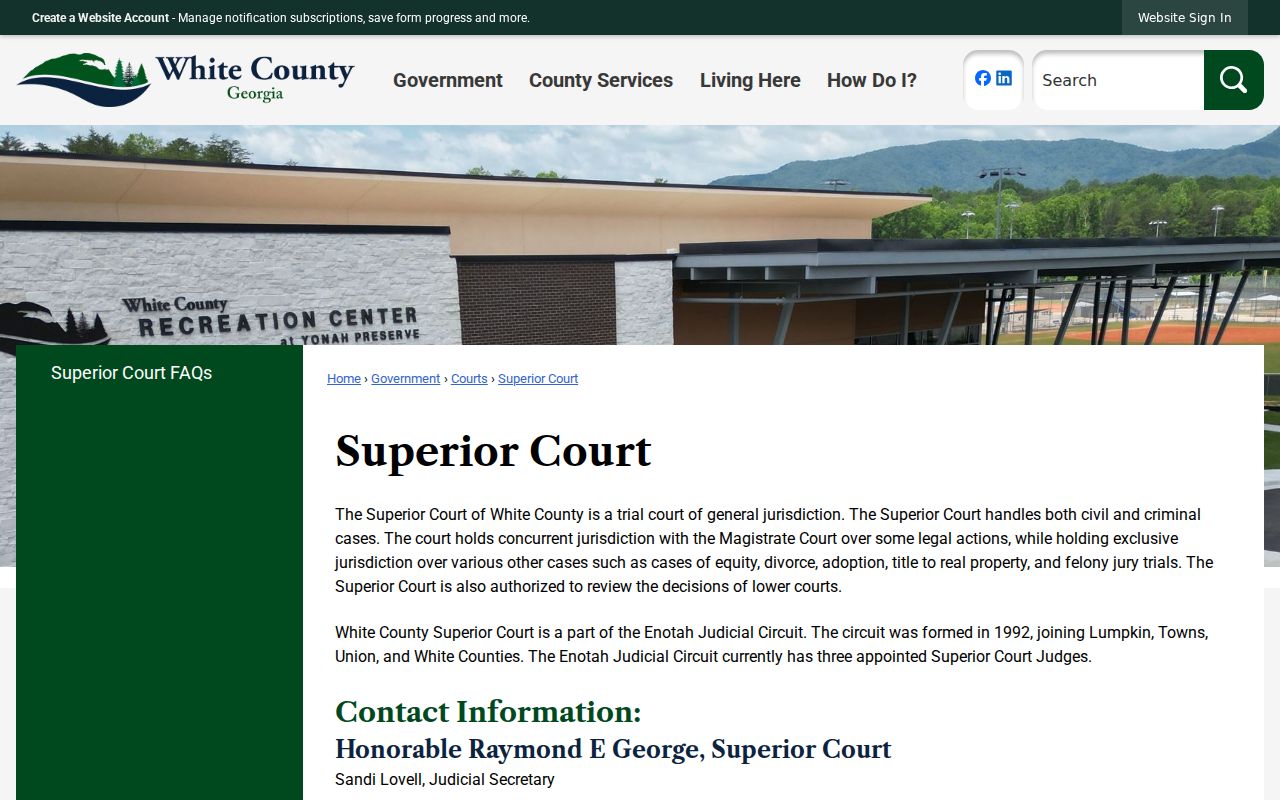
That division of authority is the key routing rule: felony merits belong to Superior Court, while warrant, traffic, and city matters may begin and remain elsewhere.
White County Case Record Searches
White County does not advertise a free public name-search portal. It is also absent from the state court e-access list reviewed in the county research. PeachCourt and re:SearchGA may provide e-filed documents for participating courts, but coverage and account access vary. The dependable White County court case lookup is the Clerk's criminal desk, followed by the separate lower-court clerk when the charge falls outside Superior Court.
- Identify the likely court from the charge, citation, warrant, or notice. Begin with Superior Criminal for a felony and the issuing lower court for its own misdemeanor or traffic case.
- Give the clerk a full party name and any case number. Add the filing year or approximate arrest date to separate similar names.
- Ask for the docket sheet first. Confirm the case number, court, filed charges, and status before ordering documents.
- Review entries for arraignment, motions, plea or trial, disposition, and sentence. Ask staff to explain where a referenced document is stored, not to interpret its legal effect.
- Request a plain or certified copy from the custodian. For an electronic certified Superior Court copy, ask whether the Georgia Superior Court Clerks' Cooperative Authority service is available for that record.
| Search Detail | Type | Required | Use |
|---|---|---|---|
| Party name | Text | Usually | Use the full legal name and known spelling variants |
| Case number | Text | No | Best direct key when shown on a notice or prior filing |
| Filing year | Year | No | Narrows a broad name request |
| Approximate arrest date | Date | No | Helps connect a booking to a later court filing |
| Case type or court | Category | No | Separates felony, warrant, traffic, and city matters |
White County Criminal Desk Contacts
The Clerk of Court contact page directs criminal questions to the Superior Criminal staff at extensions 323 or 369 through 706-865-2613. Those staff members can locate felony pleadings, dispositions, and certified copies. They can also confirm whether a requested record is available electronically or only through the clerk's custody.
The sheriff request interface also matters when the sought document is an arrest or incident report rather than a court filing:
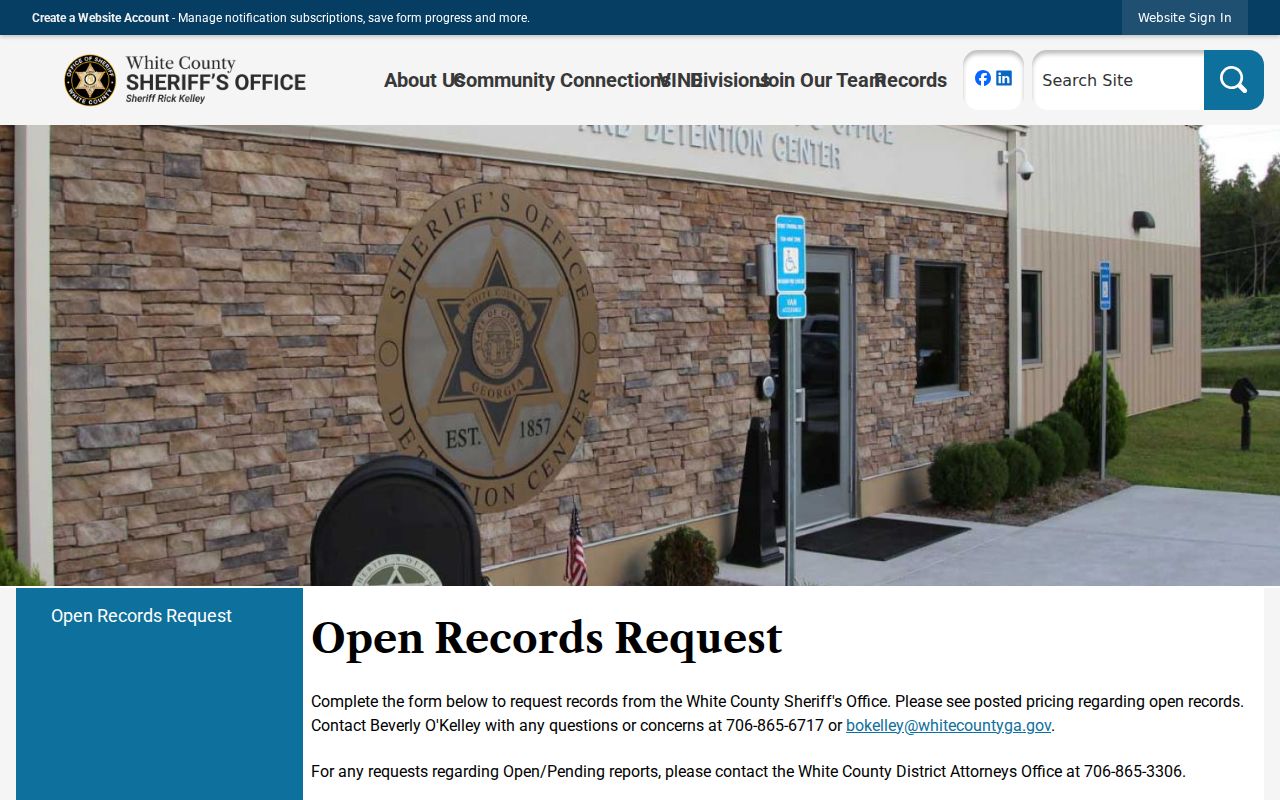
Use that form only for sheriff-created material. Return to the court clerk for pleadings, docket entries, judgments, or certified court copies.
The clerk's page provides a useful view of the local office and its contact routes:
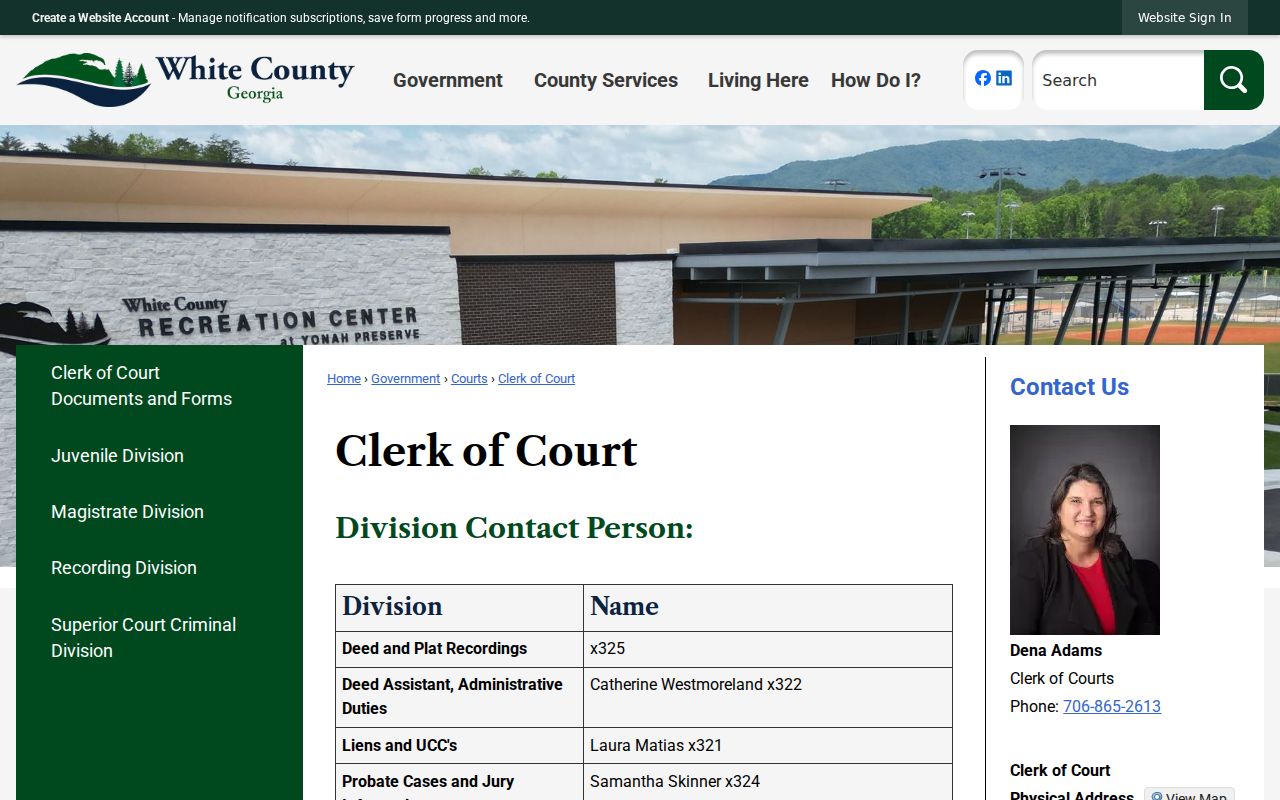
Use the criminal extensions for a filed felony case. Call Magistrate staff for a warrant or a matter that stayed in that court, and Probate staff for a traffic or game-and-fish matter within Probate jurisdiction. The District Attorney at 706-865-3306 is the better contact when an arrest or warrant has not yet produced an accusation or indictment; the DA is not the custodian of the finished clerk file.
What a Criminal Case File Contains
A court file follows the prosecution after charges are filed. It usually offers more procedural depth than a Georgia Felon Search result or a jail entry. The docket is the index: it dates filings and hearings, points to orders, and shows how the case moved. Read the actual judgment or disposition paper before drawing a conclusion from a short docket label.
| Case Number & Court | The court's identifier and the specific White County division that owns the file. |
|---|---|
| Charging Document | An accusation, indictment, or special presentment stating charges accepted for prosecution. |
| Docket Entries | A dated list of pleadings, notices, motions, orders, and courtroom events. |
| Hearing Dates | Scheduled and completed appearances, including arraignment and trial settings. |
| Disposition & Judgment | The filed outcome, such as plea, verdict, dismissal, or other final action. |
| Sentence & Conditions | The court's sentence, custody or probation terms, fines, and related conditions. |
A GCIC history links reported arrest and disposition events across Georgia, while the local file may include motions, notices, and financial entries that never appear on that history. If GCIC lacks a disposition, begin with the court or prosecutor that owns it, obtain proof of the filed result, and then follow the GBI correction process.
Reading White County Docket Terms
Short Georgia terms can hide major differences. A charging document states an allegation, not guilt. A docket entry records that something happened, but the linked paper often supplies the details. These terms help when comparing a White County court case file with a jail or GCIC record.
- Accusation
- A prosecutor's formal charging document used where Georgia procedure permits prosecution without a grand-jury indictment.
- Indictment
- A grand jury's formal statement of charges. It does not establish guilt.
- Arraignment
- The stage when the charge is presented in court and a plea is entered.
- Disposition
- The recorded outcome of a charge, such as conviction, acquittal, dismissal, or another final resolution.
- Special presentment
- A grand-jury charging instrument that can initiate a case without an earlier arrest warrant.
Georgia charge codes may carry F, M, or X severity labels. F and M point to felony and misdemeanor classifications; X can require more review. Use the filed charge, effective statute, and judgment together. A code description alone does not prove the outcome.
Criminal Case Stages in White County
A case may begin with a warrant and booking, but the court file takes shape when charges reach the clerk. The prosecutor may proceed by accusation, indictment, or special presentment. The defendant is arraigned, pretrial motions are filed, and the matter ends through a plea, trial, dismissal, or other disposition. Sentencing follows a finding of guilt.
Case flow: Charges Filed › Arraignment › Pretrial › Plea or Trial › Disposition › Sentencing
Not every arrest produces this full chain. Charges may change before accusation, and a pending warrant may not yet have a Superior Court case number. Court dates are sent by mail. The Criminal Division says an address change cannot be made by phone, so a person with an active case should use the clerk's required written process rather than assume a phone message changes the court record.
White County Warrants and Felony Files
A Magistrate Court warrant and a Superior Court felony case are related but distinct records. Magistrate Court issues arrest and search warrants. The Sheriff's Records Department handles warrant questions and maintains sheriff records. Once felony charges are filed, the Superior Criminal Division becomes the source for pleadings and the final court outcome.
The Sheriff's division overview shows how patrol, investigations, warrants, and jail work fit together:
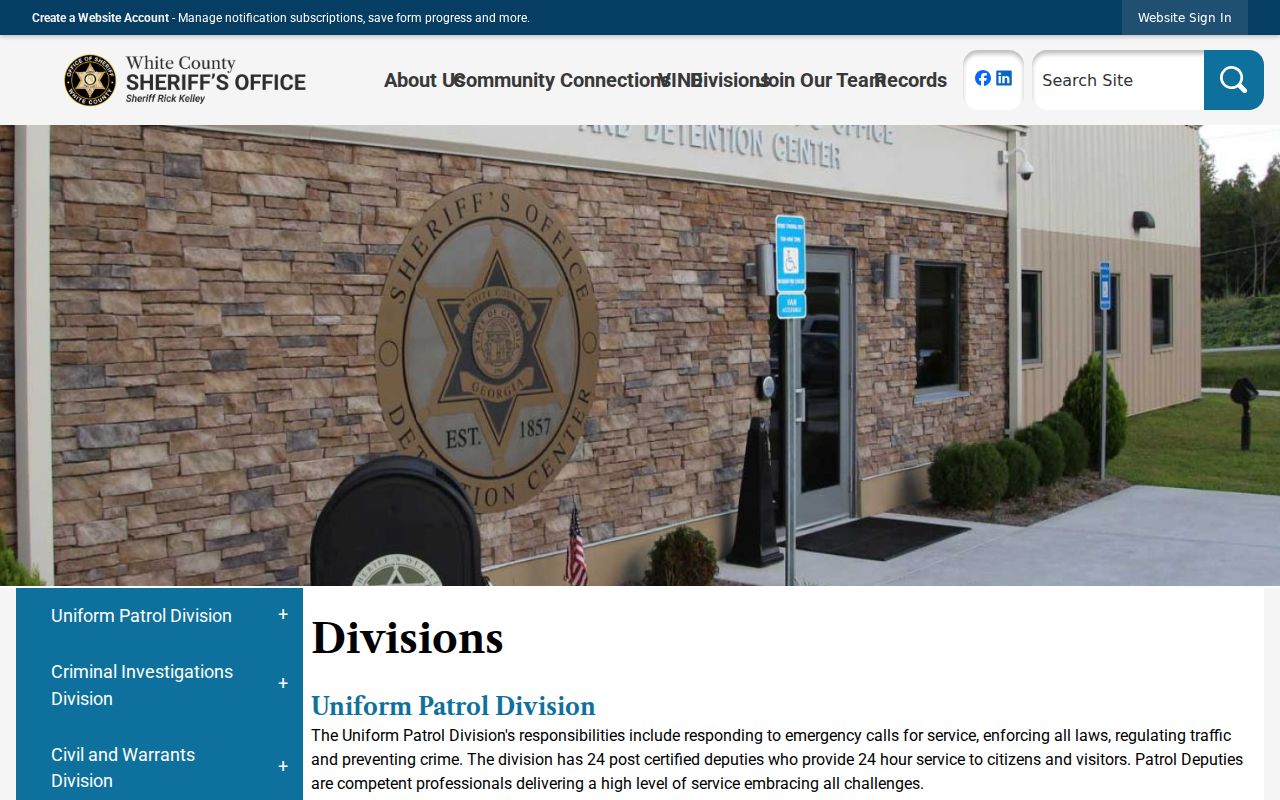
For a warrant question, call the Sheriff's Office at 706-865-5177 or its Records Department at 706-865-6717, then check with Magistrate Court at 706-865-6636. If the warrant has been served but no accusation appears, the District Attorney can address charge timing. Do not rely on an absent online result to decide whether a warrant exists.
Access Rules for Case Records
Georgia court records are generally open, but access is not absolute. Juvenile material, protected victim data, personal identifiers, and records covered by a sealing order may be withheld or redacted. An online view can omit material that exists in the clerk's paper or document system. Ask the owning clerk when a known case does not appear remotely.
Georgia uses record restriction for limits on dissemination of eligible GCIC arrest information. Court sealing is a separate step in qualifying cases. A restricted GCIC event does not mean every court paper vanished, and a dismissed charge does not automatically erase the booking. The Attorney General's open-government resources explain the state's access framework, while the clerk can state what is available in a specific White County file.
Record accuracy: A court docket reflects filed case activity. It does not prove that every original arrest allegation became a conviction. Verify the result in the disposition or judgment and request a certified copy when an official copy is needed.
Certified White County Court Copies
Choose the copy based on the task. A docket sheet helps trace events. A charging document states what was filed. A disposition or judgment proves the recorded outcome. A certified copy carries the clerk's authentication and is the sound choice when another official process asks for proof.
The jail's published capacity and intake material helps distinguish a booking source from a court-file source:
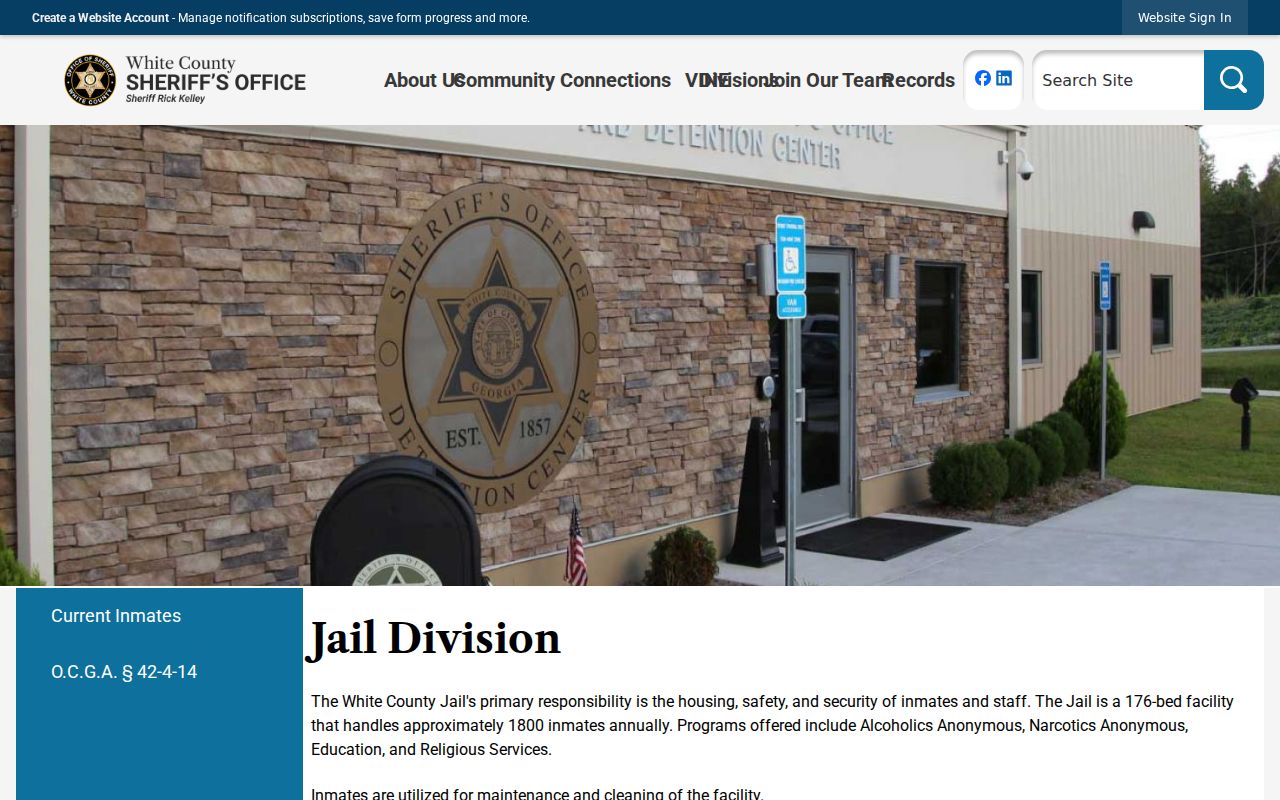
A jail intake may lead to a case, but it cannot stand in for the clerk's filed disposition.
The Superior Court Criminal Division describes creation and custody of these criminal files:
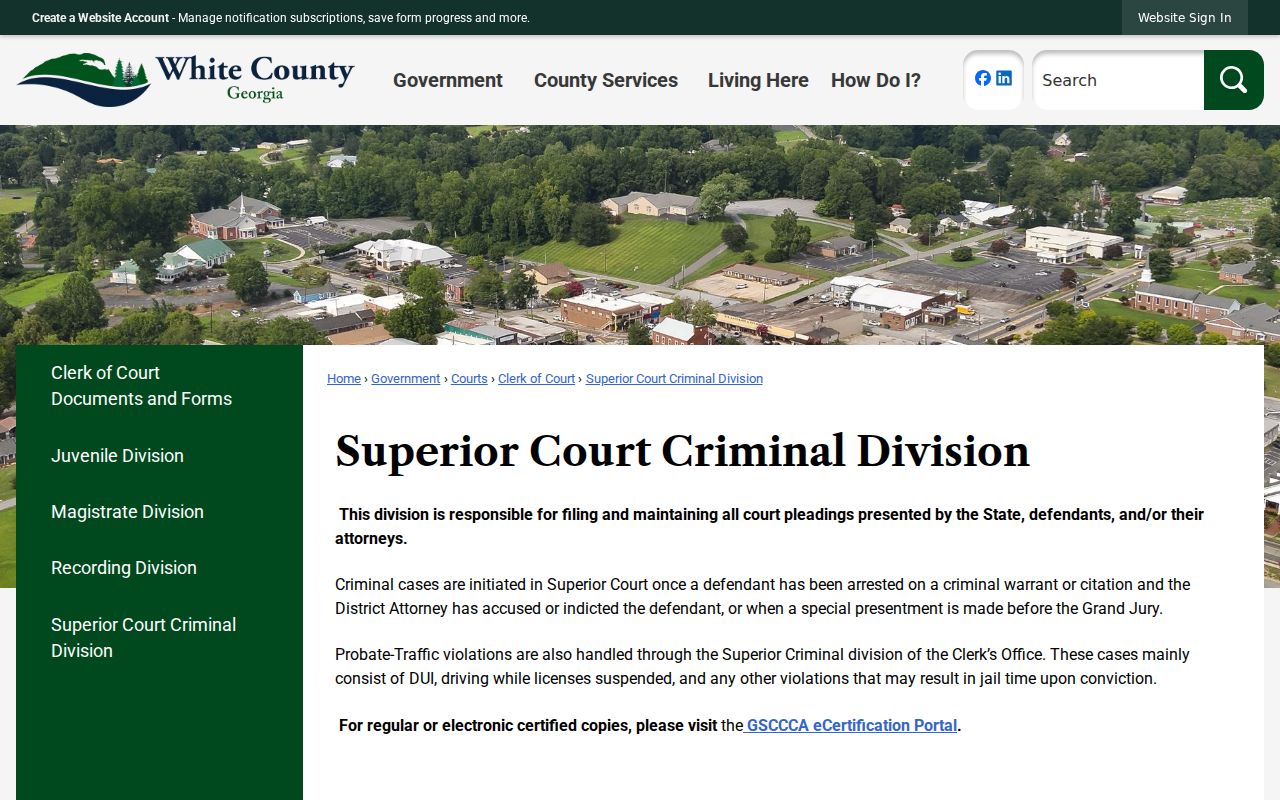
Ask for the exact case number, document title, and certification status before payment or pickup. If the record is old, unavailable online, or filed under a spelling variant, staff can explain the search needed. The research did not establish a fixed White County court-copy fee, so obtain the current amount and delivery options directly from the clerk.